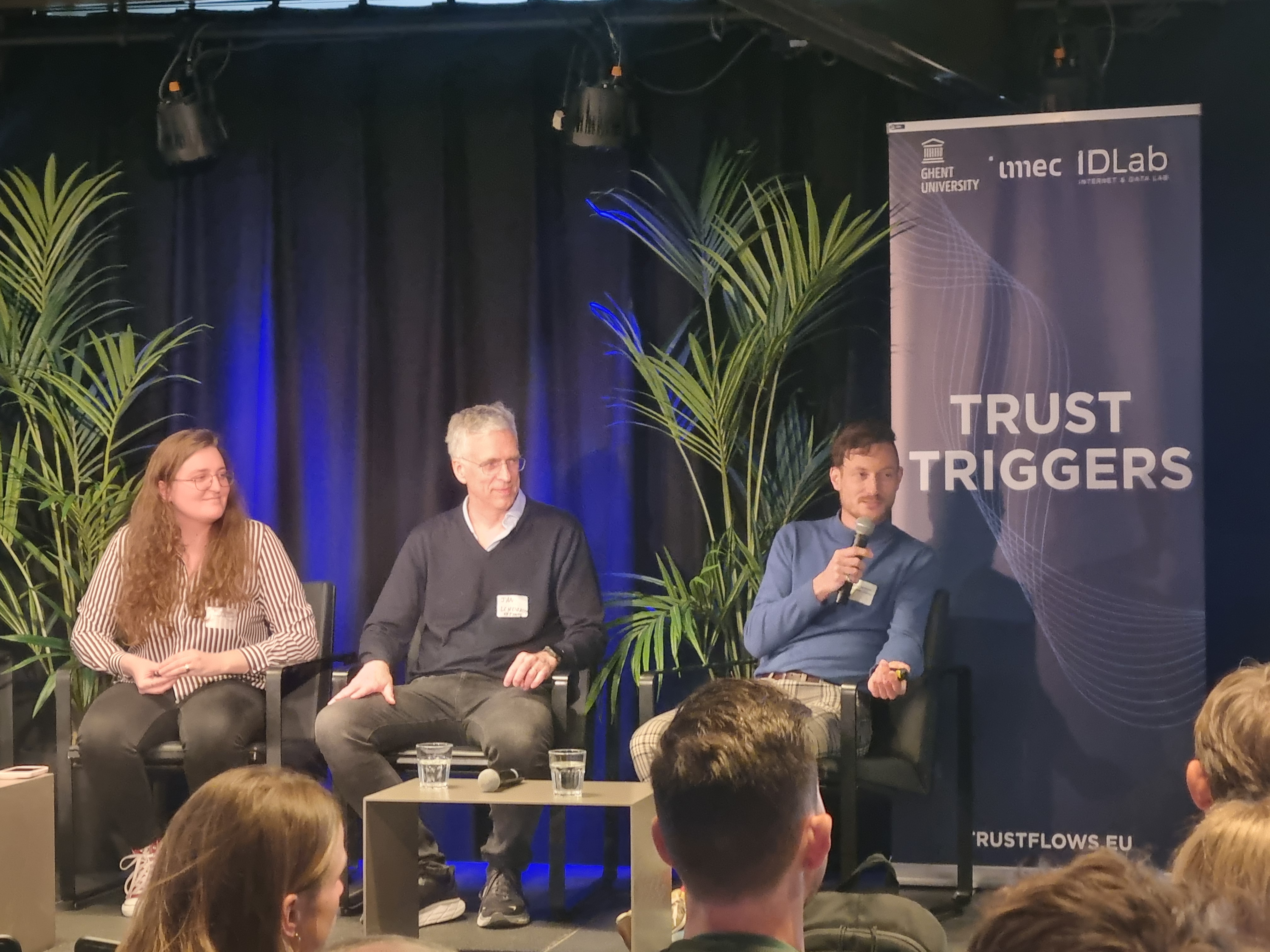
Thanks for joining the first Trust Triggers event! This was the program (slides are linked):
| Time | Session |
|---|---|
| 13:00 | Welcome and introduction of the Trust Triggers event series by Pieter Colpaert and a positioning of Trustflows within The Brain Community by Wim De Wispelaere (slides) |
| 13:30 | Keynote: A view on creating access control over wallets and how to contribute to ISO standards by Jan Lindquist. Introduction by Beatriz Esteves. (Slides) |
| 14:00 | The EUDI: reflections on the protocol by Jan Lindquist (slides), Beatriz Esteves and Wouter Termont (slides), based on their white paper: “OpenID for European Digital Identity – an architectural analysis of user-centric identity management” |
| 14:30 | Coffee break offered by IDLab |
| 15:00 |
Our 3 Trust Triggers pitches
|
| 16:30 | Wrap-up of the day and optional reception |
The keynote and the curator

Jan Lindquist has been shaping technology standards since the 1990s. His career-long contributions to ISO and CEN span privacy, access control, and digital identity, most notably through his work on ISO 27560 Consent record information structure, the privacy information notice standard. In his keynote, Jan argues that standards are where vision becomes lasting reality. He invites researchers to discover how their ideas can gain global reach by engaging in the standards processes shaping EU Digital Identity Wallets and beyond.

Meet dr. Beatriz Esteves! She’s a postdoctoral researcher working on the intersection of policy modelling, personal data protection, trusted data flows and decentralised datastores. She’s an active contributor and editor of specifications for the Data Privacy Vocabularies and Controls Community Group (W3C DPVCG) and the Open Digital Rights Language Community Group (W3C ODRL CG).
The aftermovie
Trust Triggers
Trust Triggers is a new event series focused on trust-building patterns for the Web. Each event will have three parts:
- a keynote and discussion on a selected topic relevant to the community
- a lenghty coffee break for networking
- three use case presentations